
Bowling Green, Kentucky | Serving Companies Nationwide
Workplace Injury Prevention & Corporate Wellness Solutions
Introduction: A Simple Sign That Sparked a Big Debate
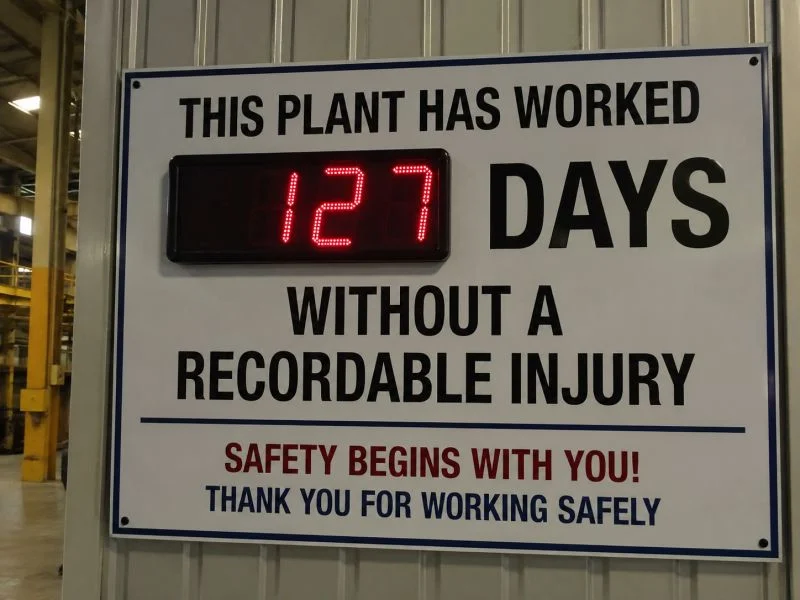
Walk into almost any manufacturing facility and you’ll see it immediately—a large board tracking “Days Without a Recordable Injury.”
For decades, this has been one of the most common safety metrics in industrial environments. It’s simple, visible, and easy to understand.
But after I asked a question on LinkedIn about whether these signs actually improve safety culture or unintentionally harm it, the response from safety professionals was overwhelming.
Hundreds of EHS leaders weighed in—and the discussion revealed a clear divide:
Some see these boards as a powerful symbol of pride and accountability. Others see them as outdated lagging indicators that can unintentionally discourage early reporting and proactive care.
The truth, as with most things in safety, is more nuanced.
Why “Days Without Injury” Boards Became Standard Practice (The Pros)
Before we critique them, it’s important to acknowledge why these boards exist—and why many organizations still use them effectively.
1. They create visibility around safety
Safety can be invisible until something goes wrong. These boards make performance tangible and keep safety top-of-mind for every employee walking through the facility.
2. They build shared accountability
A visible streak can reinforce a simple cultural message: we are responsible for each other.
In many organizations, this creates pride and unity around safe behavior.
3. They help reinforce progress over time
For companies that have reduced incident rates significantly over the years, these boards can serve as a visual representation of real improvement.
4. They simplify communication
Not every employee wants dashboards or EHS reports. A single number is easy to understand at every level of the organization.
Used correctly, these boards can support awareness and engagement.
But they are not without unintended consequences.
Where the Model Breaks Down in Modern Safety Culture
Many EHS leaders in the discussion pointed out that the issue isn’t the board itself—it’s what it can influence over time.
1. The “Don’t Break the Streak” Effect
When a number becomes public and celebrated, it can create pressure to protect it at all costs.
That pressure may lead to:
Delayed reporting of minor injuries
Employees pushing through discomfort
Reluctance to use onsite care resources
The unintended result is that early warning signs get ignored until they become recordable injuries.
2. Underreporting Creates Blind Spots
When safety performance is tied too closely to recordables, organizations can unintentionally reward silence instead of transparency.
Not because employees don’t care—but because they don’t want to be the reason the streak resets.
3. A Long Streak Doesn’t Always Mean Low Risk
One of the most important insights from the discussion was this:
A long “days without injury” streak does not always mean a company is safer—it may simply mean issues are not being surfaced early.
Meanwhile, risks like:
Ergonomic strain
Fatigue accumulation
Process breakdowns
Near-miss patterns
can build quietly beneath the surface.
A Better Framing: From “Avoiding Recordables” to Protecting People
A growing number of EHS professionals are shifting the conversation from:
“How do we avoid recordable injuries?”
to
“How do we identify and treat issues early enough that they never become recordables?”
One practical middle-ground approach is shifting focus from recordable injuries to lost-time incidents.
This encourages:
Early reporting of discomfort
Use of appropriate medical care
Modified duty programs
Faster intervention before conditions worsen
It changes the culture from protecting a number to protecting the employee.
The Real Shift: From Lagging Indicators to Leading Safety Metrics
The most effective modern safety programs are moving away from lagging indicators and toward proactive, leading metrics.
Here are a few that are gaining traction:
Hazard Resolution Speed
How quickly are safety concerns actually addressed once reported?
More importantly—do employees see visible action taken?
Nothing builds trust faster than follow-through.
Time Spent on the Floor
Safety cannot be managed from an office.
Organizations are increasingly tracking how often EHS teams are:
Engaging with employees in real work environments
Observing workflows in real time
Identifying risks before incidents occur
Most hazards are only visible at the point of work.
New Hire Ergonomic Onboarding
Early habits shape long-term outcomes.
Bringing hands-on ergonomic coaching directly to the workstation helps:
Reduce early-stage injuries
Set expectations from day one
Build long-term movement patterns that prevent strain
The Missing Piece in Most Safety Programs: Early Intervention
One of the most impactful shifts happening in modern safety culture is the focus on early intervention.
When employees are encouraged to report discomfort early—and supported with timely care—organizations consistently see:
Fewer recordable injuries
Reduced severity of incidents
Faster recovery timelines
Higher employee trust
This is where onsite physical therapy, athletic training, and health coaching models can play a major role.
At MuuvWell, we see this pattern consistently: when employees have access to care early, small issues don’t become operational disruptions.
Treating the Whole Employee (Not Just the Work Injury)
Another overlooked factor in workplace safety is the impact of off-the-job injuries.
Employees don’t separate their bodies when they clock in.
A strain from home or weekend activity can directly affect:
Movement patterns
Fatigue levels
Injury risk on the job
Organizations that take a more holistic approach to employee health often see fewer workplace injuries—not because they are reacting more, but because they are preventing more.
Culture Is the Real Safety System
At the center of this entire conversation is a simple truth:
Safety metrics don’t create culture—culture determines how those metrics are experienced.
In low-trust environments, “days without injury” signs can create pressure.
In high-trust environments, they become secondary to something more important:
Early reporting
Open communication
Fast response to issues
A shared commitment to employee well-being
The strongest safety cultures aren’t defined by streaks.
They’re defined by how quickly people get help when something starts to go wrong.
Listen to the Full Conversation
This article was inspired by a podcast discussion following a LinkedIn question that sparked significant engagement among safety professionals.
🎧 Listen here:
Rethinking Safety Culture and Recordable Injuries Podcast
Final Thought
The question isn’t whether “days without injury” signs are good or bad.
The real question is:
What behavior are they actually driving inside your organization?
Because in modern EHS leadership, the best-performing safety programs aren’t the ones with the longest streaks.
They’re the ones where employees feel safe enough to speak early, get care quickly, and prevent small issues from becoming major injuries.