
Several years ago, I was rocking my daughter when she was still an infant. Instead of being present in a moment I would never get back, I was looking at something on social media and getting angry about it.
That realization hit me hard.
What began as a 30-day experiment to block internet access on my phone has now lasted almost five years. I found that I was more present with the people I cared about, had more intentional conversations and spent less time worrying about things I could not control.
That experience changed the way I think about digital distraction personally. More recently, it has made me ask a bigger question:
What happens when that same loss of attention occurs in a safety-sensitive workplace?
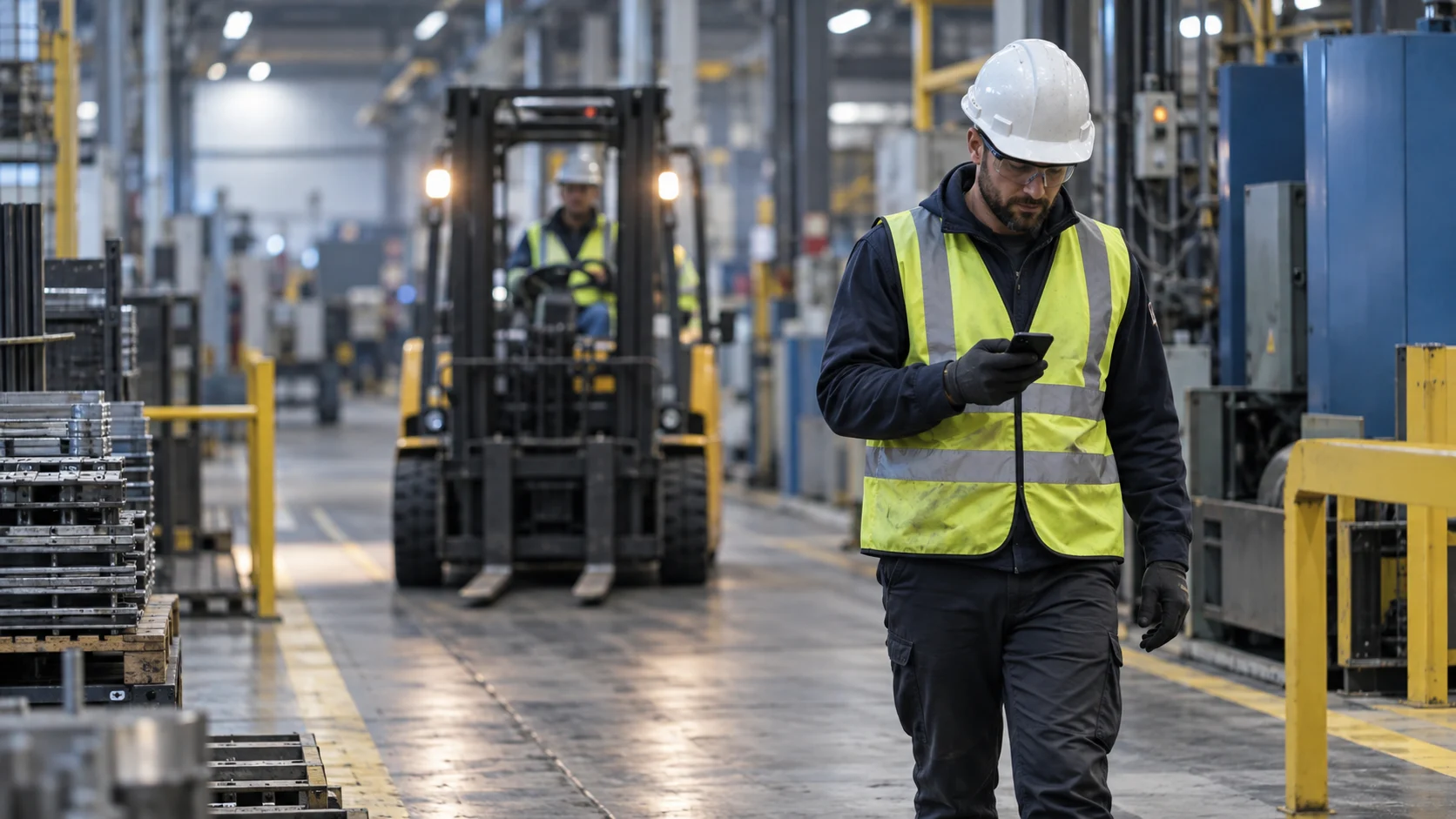
A distraction at home may cost us a meaningful conversation. A distraction around a forklift, production line, company vehicle or piece of heavy equipment can have far more serious consequences.
The Phone Does Not Have to Be in Your Hand to Be a Distraction
Most workplace phone policies focus on visible behavior. Do not text while driving. Do not use a phone on the production floor. Keep personal devices put away while operating equipment.
Those rules are important, but the research suggests the problem begins before someone ever picks up the device.
A study on the attentional cost of cell phone notifications found that simply receiving a notification can disrupt performance on an attention-demanding task, even when the person does not interact with the phone. Other research has found that the mere presence of someone's smartphone can reduce available cognitive capacity.
Think about what that means in a modern workplace. The employee may follow the rule and leave the phone in a pocket, but still feel it vibrate. A smartwatch may light up during a critical task. The employee may glance at a personal message and return to work physically, while part of their attention remains somewhere else.
Digital distraction is not only the moment someone looks at a screen. It is also the attention that is lost before and after that moment.
We Are Asking People to Work in a Constant Stream of Interruptions
Microsoft reported that the average employee in its workplace data was interrupted by a meeting, email or chat notification about every two minutes during the workday. That added up to 275 interruptions a day.
For many office employees, those interruptions create fragmented work and lost productivity. In a safety-sensitive role, the stakes may be much higher.
A momentary loss of focus can affect:
Reaction time
Situational awareness
Decision-making
Communication between coworkers
The ability to recognize a changing hazard
The safe operation of vehicles, tools and equipment
This is why digital distraction belongs in the safety conversation. It is not just an HR concern, a productivity issue or a personal bad habit. It can become an exposure that affects the employee and everyone working around them.
Listen to the Podcast
In this episode of The MuuvWell Podcast, Wade and I discuss our own experiences with digital boundaries, what current research tells us about attention and how safety and EHS leaders can begin addressing this emerging risk.
We are not arguing that phones, computers or other technology are bad. We use these tools every day, and they provide tremendous value. The real question is whether the technology is serving us or whether we have lost control of our attention to it.
At MuuvWell, we use a mobile app to educate, support and engage employees, including through notifications. We do not believe technology is the enemy. The responsibility for companies like ours is to use technology intentionally, respect employees' attention and avoid creating unnecessary interruptions. A helpful tool should support people without demanding their attention during safety-sensitive work.
The Risk Does Not End When the Shift Is Over
The most obvious risk is an employee looking at a phone while performing a dangerous task. But there is another part of this conversation that safety professionals should not overlook.
What if an employee stays up most of the night watching videos, scrolling social media or streaming a show, then arrives for a shift after only a few hours of sleep?
The device may never come out at work, but its effects can still come through the door. The employee may be fatigued, mentally foggy and less able to respond to a changing situation.
Digital distraction is therefore both an immediate risk and a recovery issue. It can pull attention away during the task, and unhealthy digital habits outside work can affect how prepared someone is when the next shift begins.
Safety leaders cannot control employees' personal lives. We can, however, provide education, help people understand the connection and create a workplace culture that respects healthy boundaries.
A Practical Framework: Measure, Protect and Model
Adding another policy is not enough. Most employees already know they should not be looking at a phone while driving or operating equipment. A more useful approach is to understand the risk, change the work environment and involve leadership.
1. Measure
Start by learning how digital distraction is affecting your workforce.
The 16-question Smartphone Distraction Scale can provide an anonymous baseline across four areas: attention impulsiveness, online vigilance, emotion regulation and multitasking. Safety leaders can also hold short conversations with employees about when notifications or devices make it hardest to stay focused.
Digital distraction should also become a consideration during incident investigations and root cause analysis. Useful questions may include:
Was a phone, smartwatch or other device present?
Was the employee using or responding to a device?
Did a notification occur shortly before the event?
Could attention have remained divided after the interaction ended?
Did fatigue related to late-night technology use play a possible role?
The goal is not to create a culture of surveillance or automatically blame the employee. The goal is to understand whether digital distraction is a contributing factor that the organization has previously failed to measure.
2. Protect
Once you understand the exposure, make focused work easier.
For safety-sensitive roles, that may mean providing a secure place for phones away from the work area while keeping them accessible for emergencies. It could include reviewing smartwatch expectations, protecting critical tasks from avoidable interruptions and identifying specific phone-free zones.
Organizations can also offer voluntary digital-boundary or digital-detox challenges. We have used these with MuuvWell clients, and the responses went much deeper than reducing screen time. Employees told us they felt less anxious, improved relationships with their children and became more present for the people they cared about.
One participant said they realized they had been living someone else's life and wanted to start living their own experiences. That statement has stayed with me.
Education is most effective when it helps employees connect a change to their own reason for making it. For one person, the goal may be safer work. For another, it may be better sleep, less anxiety or more time with family.
3. Model
Leaders set the digital expectations of an organization, whether they realize it or not.
If a manager checks two phones throughout a meeting, sends emails at 4:00 a.m. or expects immediate responses on nights and weekends, employees learn that they are supposed to remain constantly available.
I used to send early-morning emails because I thought it showed how hard I was working. What I eventually realized was that I was placing stress on my team and reinforcing the idea that they always needed to be connected. Now, if I write something early, I can schedule it to arrive during normal working hours.
Leaders can also hold phone-free meetings, use walking meetings when appropriate and be clear about when an immediate response is truly necessary. If we expect employees to protect their attention during high-risk work, leadership should demonstrate the same discipline.
Digital Distraction Affects Every Generation
It is easy to frame this as a problem involving younger employees. I do not believe that is accurate.
People across every generation can fall into the same patterns of checking, scrolling and reacting to notifications. In some cases, people who did not grow up surrounded by constant digital input may find that an interruption pulls them away from a task even more sharply.
This should not become a generational blame game. It is a workforce issue, and it requires a workforce-wide response.
Start the Conversation Before an Incident Forces It
Digital distraction is still an emerging area of workplace safety. That makes now the right time for safety and EHS leaders to begin asking questions.
Talk to your employees. Establish a baseline. Review where devices are allowed. Add digital distraction to incident investigations. Create opportunities for employees to build healthier boundaries. Most importantly, ask leaders to model the focus they expect from everyone else.
Technology should help people do their jobs, not quietly increase the risk of doing them.
At MuuvWell, our goal is to help organizations keep people healthy, safe and performing at their best. If your company is exploring digital-distraction education, a workforce challenge or a more proactive approach to workforce performance, visit MuuvWell or contact our team at info@muuvwell.com.