
Pregnancy is personal.
But for employers, it is also a workforce issue.
If you're an HR or benefits leader, you already know that pregnancy and childbirth can have a significant impact on your organization's healthcare costs. For self-funded employers in particular, complicated pregnancies, C-sections, neonatal care, and other maternal and infant health complications can create substantial claims.
But there's another side of the conversation that doesn't get enough attention.
What are we doing before problems occur?
Most employer maternity strategies are built around healthcare coverage, parental leave, and resources employees can access when they need them.
Those things matter.
But what if we also gave employees proactive support throughout pregnancy and postpartum?
What if we helped women understand how to safely move their bodies, maintain physical activity, manage the changes that come with pregnancy, and rebuild strength after delivery?
What if maternal health wasn't treated as a standalone benefit, but as part of a larger workforce performance strategy?
That's the opportunity I see for employers today.
Pregnancy Doesn't Just Affect Healthcare Costs
When we talk about the financial impact of pregnancy, it's easy to focus exclusively on the delivery.
But the journey starts much earlier.
Pregnancy can bring significant physical and emotional changes, and some women experience complications that require additional medical care. Gestational diabetes, hypertension and preeclampsia, excessive weight gain, mental health challenges, C-sections, and NICU admissions can all have meaningful consequences for employees, families, and employer-sponsored health plans.
We shouldn't pretend that exercise can eliminate these risks.
It can't.
Pregnancy is complex, and many complications aren't something an employee can simply exercise her way out of.
But we also shouldn't overlook the role that physical activity, exercise, nutrition, recovery, and other healthy behaviors can play in supporting maternal health.
That's where prevention and proactive support come into the conversation.
Instead of waiting until an employee is struggling, employers can give her resources that help her make healthy decisions throughout the pregnancy.
The Problem With Generic Wellness
Here's where I think many corporate wellness programs fall short.
An employee may have access to a gym.
She may have a step challenge.
She may have a generic fitness app.
She may even have access to a health coach.
But pregnancy changes the questions.
An employee might be wondering:
Can I keep lifting weights?
How hard should I be exercising?
What should I change as my pregnancy progresses?
What if I wasn't active before pregnancy?
What exercises are appropriate for me right now?
When can I start exercising after giving birth?
How do I rebuild my strength postpartum?
These aren't generic fitness questions.
They require specialized knowledge.
And unfortunately, many women receive conflicting advice about exercise during pregnancy.
Some women become afraid to exercise because they're worried about harming themselves or their baby.
Others simply stop being active because their normal routine becomes uncomfortable or impractical.
And some women who weren't active before pregnancy may assume that it's too late to start.
That's a missed opportunity.
Research involving pregnant women, postpartum women, and healthcare providers found a clear need for evidence-based exercise information tailored to specific stages of pregnancy and postpartum. The research also identified barriers such as childcare, scheduling, fear of doing harm, and access to exercise facilities.
The answer isn't to tell every woman to do the same thing.
The answer is to provide appropriate guidance for the individual.
This Is Why I Wanted to Talk With Dr. Rachel Tinius
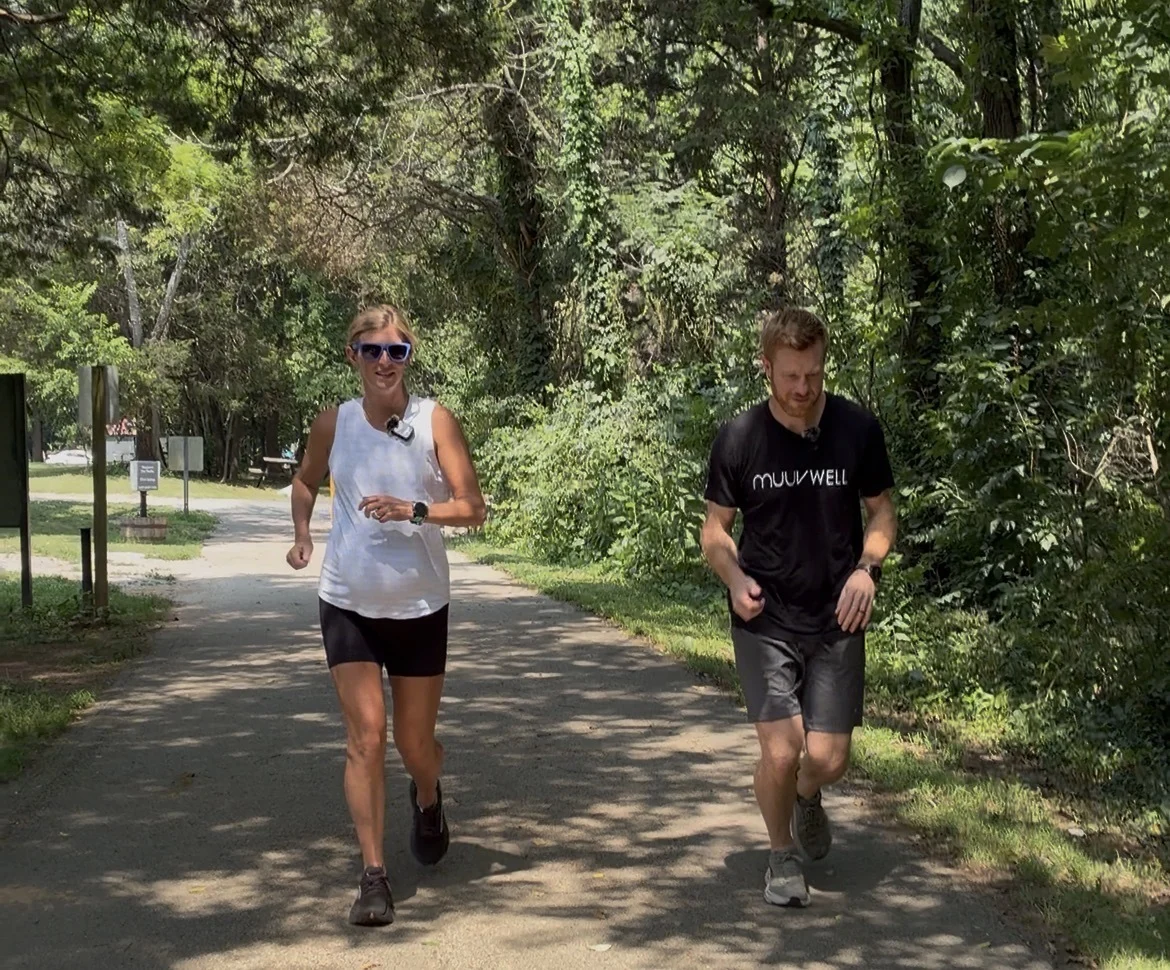
I recently had the opportunity to sit down with Dr. Rachel Tinius, an exercise scientist, researcher, professor at Western Kentucky University, and the creator of BumptUp, to talk about pregnancy, postpartum health, exercise, and what employers can do better.
Rachel's work has focused heavily on helping women remain physically active throughout pregnancy and postpartum.
And one thing that stood out to me in our conversation was how much misinformation and uncertainty still exists around exercise during this stage of life.
Supporting Women Through Pregnancy, Postpartum & Life with Dr. Rachel Tinius
If you're an HR or benefits leader, I highly recommend listening to this conversation.
Because this isn't just a conversation about exercise.
It's about how we can better support employees through one of the biggest transitions of their lives.
Postpartum Is Where the Workforce Conversation Gets Really Interesting
The story doesn't end when the baby is born.
In many ways, that's when another important workforce challenge begins.
The transition back to work.
Think about what a new mother may be navigating when she returns from parental leave.
She's recovering physically.
She's likely sleeping differently.
Her responsibilities at home have changed.
She may be trying to rebuild her strength.
She may be dealing with physical symptoms she didn't have before pregnancy.
She may be navigating childcare.
And she is being asked to step back into her professional role.
For HR leaders, this matters because employee experience and retention matter.
We spend enormous amounts of time and money recruiting talented people.
We work hard to develop them.
We invest in their careers.
Then one of life's biggest transitions happens, and sometimes we don't have a meaningful strategy for supporting them through it.
A thoughtful maternal health program can't guarantee that an employee will stay.
But it can communicate something incredibly important:
We care about you as a person, not just as an employee.
That matters.
Movement Can Be Part of the Postpartum Transition
Postpartum exercise also requires nuance.
The goal shouldn't be to rush a new mother back into her old fitness routine.
It's about helping her understand what appropriate movement looks like at each stage of recovery.
BumptUp was designed specifically around this continuum.
Its programming includes pregnancy and postpartum exercise, individualized intensity, educational content, symptom tracking, and postpartum programming. The platform was developed with evidence-based guidance and clinical testing in mind.
That specialization is important.
A generic fitness program isn't necessarily equipped to answer the questions that come with pregnancy and postpartum.
Why We Incorporated BumptUp Into MuuvWell
This is exactly why we chose to incorporate BumptUp into MuuvWell's virtual workforce performance program.
We don't believe HR needs another disconnected point solution.
You don't need one app for exercise.
Another for nutrition.
Another for mental health.
Another for pregnancy.
Another for employee engagement.
And another dashboard to manage all of it.
We believe these pieces should work together.
At MuuvWell, our goal is to help employees perform better and live healthier through a comprehensive virtual workforce performance experience.
That includes movement.
Nutrition.
Recovery.
Energy.
Mindset.
Wellbeing.
And now, specialized support for pregnancy and postpartum.
BumptUp gives us the ability to bring specialized maternal exercise expertise into that broader workforce performance ecosystem.
That's much more powerful than simply handing an employee another app.
What HR Leaders Should Be Asking
If you're responsible for benefits, employee wellbeing, or workforce performance, I think there are a few questions worth asking:
Are we supporting employees before they experience a health problem, or primarily after?
Do our wellness resources account for major life stages like pregnancy and postpartum?
Are our employees getting evidence-based guidance, or generic wellness advice?
How are we supporting employees as they transition back to work after having a baby?
Are our benefits connected, or are we continuing to add disconnected point solutions?
And perhaps the biggest question:
Are we designing benefits around the real lives of our employees?
Because employees don't experience their lives in benefits categories.
Their physical health affects their mental health.
Their sleep affects their performance.
Their nutrition affects their energy.
Pregnancy affects movement, recovery, work, family, and wellbeing.
These things are connected.
Our workforce performance strategy should be connected too.
Proactive Maternal Health Is Workforce Performance
I believe the future of corporate wellness is moving away from simply giving employees access to resources.
It's about helping people actually use the right resources at the right time.
Pregnancy is a perfect example.
We can wait until a complication occurs.
We can wait until an employee is struggling.
We can wait until she returns from maternity leave and is overwhelmed.
Or we can start earlier.
We can provide education.
We can provide specialized exercise guidance.
We can support healthy movement.
We can help employees navigate postpartum recovery.
And we can make it easier for employees to take care of themselves while they're also taking care of everyone else.
That's what workforce performance means to me.
It's not just about getting more out of your employees.
It's about helping people become healthier, stronger, more capable, and more confident so they can perform at their best at work and at home.
Learn More About BumptUp
If you're interested in learning more about the maternal health component we've incorporated into MuuvWell, BumptUp is a great place to start.
BumptUp provides evidence-based physical activity and educational support for women throughout pregnancy and postpartum, including individualized exercise intensity, full-body workouts, prenatal yoga, postpartum programming, symptom tracking, and educational resources.
Learn more about BumptUp: CLICK HERE
You can also explore the research behind the program and learn more about how it was developed from the work of Rachel Tinius and her research team.
Want to Build a More Proactive Workforce Performance Strategy?
Maternal health is just one piece of the workforce performance puzzle.
At MuuvWell, we help employers take a more proactive approach to employee health by combining personalized wellness support, movement, nutrition, recovery, mindset, and performance resources into one virtual experience.
If you're an HR, benefits, or people leader and you're wondering what this could look like for your organization, let's talk.
We'll learn about your workforce, your challenges, and your goals and help you determine whether MuuvWell is a good fit.
Connect With MuuvWell
SCHEDULE A MEETING WITH MUUVWELL
Because when we help people leave work better than when they arrived, everybody wins.
Kevin Winn
Founder & CEO, MuuvWell
muuvwell.com