
From the Ballpark to the Boardroom
By Kevin Winn, Co-Founder of Muuvwell
A 24-hour ultramarathon and the modern workplace may appear to have very little in common.
One takes place on a 0.31-mile loop inside a minor league baseball stadium. The other may unfold in a manufacturing facility, office, warehouse, hospital, or construction site.
But both reveal something important about people: We perform better when we have a meaningful purpose, consistent habits, trusted relationships, and a shared goal.
Over the years, the Hot Rod Ultra has taught us lessons that extend far beyond running. These lessons can help business leaders and HR professionals build healthier, more connected, and more resilient workforces.
From Four Runners to a 24-Hour Stadium Race
Six years ago, on a crisp morning in downtown Bowling Green, Kentucky, four of us gathered for a spontaneous, free run.
It was during the COVID-19 pandemic, and we wanted to encourage our community, celebrate movement, and, if I am being honest, introduce people to our new business.
We did not have a grand vision. But sometime during that long run, the idea became bigger than promotion. I began to see what can happen when people move together in pursuit of something that matters.
Soon afterward, I approached Eric Leach, then general manager of the Bowling Green Hot Rods, with a question that sounded slightly ridiculous:
“What would you think about letting us run inside the baseball stadium for 24 hours straight?”
I expected a laugh. Instead, Eric said, “Yep, let’s do it.”
He did more than open the stadium to us. He eventually joined the event and walked 27 miles himself.
That was the beginning of the Hot Rod Ultra.
The first official stadium race drew 36 participants. It grew to 60, then 100, then 130, and eventually sold out with 200 participants.
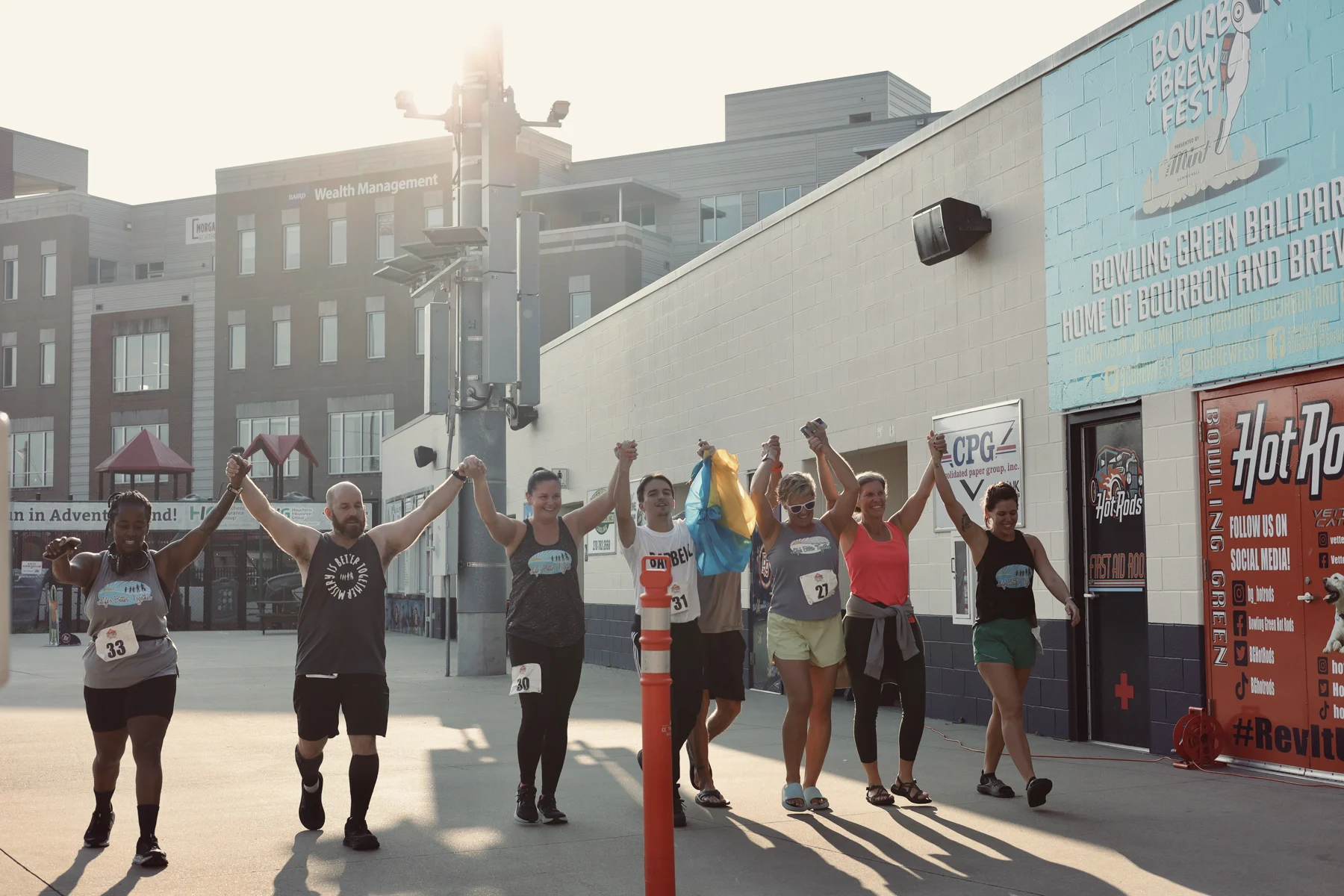
Today, runners and walkers travel to Bowling Green to complete as many laps as they choose inside the baseball stadium. Some pursue 100 miles. Others set out to walk farther than they ever have before. Some participate individually, while others share the experience with friends or coworkers on a relay team.
The format is unusual, but the lessons are universal.
Over the years, my Muuvwell co-founder, Wade Weatherholt, and I have watched people endure fatigue, uncertainty, setbacks, and self-doubt. We have also watched them find strength through purpose, habits, relationships, and a common goal.
Those are not only ultramarathon lessons. They are also building blocks of a resilient workforce.
Purpose Changes the Way We Experience Hard Things
Every company must generate revenue, operate effectively, and earn a profit. But healthy organizations also answer a deeper question:
How are we using our work to serve people and a purpose beyond ourselves?
The Hot Rod Ultra is Muuvwell’s primary ministry event. Race proceeds benefit Curbside Ministries, a Bowling Green nonprofit that serves underserved families, especially children, through meals, relationships, activities, and practical support.
That mission is personal to us.
While volunteering with my family, my 11-year-old watched children pull discarded pizza crusts from a trash can because they were still hungry. We have seen children walk barefoot across gravel to reach what may be their only hot meal that day.
Those moments are difficult to forget.
In 2025, the Hot Rod Ultra raised $50,000 for Curbside Ministries. That support helps provide meals, shoes, Christmas gifts, and consistent care for children in our community.
At 2:00 a.m., when a runner’s legs hurt and quitting feels reasonable, knowing that each lap supports a child gives the discomfort meaning.
Purpose does not remove the difficulty. It changes the reason to continue.
The same principle applies at work. Employees are more likely to persevere when they understand who benefits from their effort, how their role contributes, and why their work matters.
A mission cannot simply be a sentence on a wall. Leaders must connect everyday decisions and behaviors to it.
Four Workforce Resilience Lessons From an Ultramarathon
1. Consistent Daily Habits Create a Stronger Baseline
In an ultramarathon, extreme highs and lows are guaranteed.
A runner who feels invincible at mile 10 can pay for poor pacing at mile 50. The goal is not to feel great every minute. The goal is to manage your energy well enough to keep moving when conditions change.
Wade and I still laugh about one of my lowest moments during a 100-mile race. Around mile 25, I spent a miserable stretch in a porta-potty wondering whether I could take another step.
By mile 92, I ran my fastest mile of the race.
Work has similar cycles.
A strong Tuesday can become an overwhelming Thursday. Resilient teams are not teams that avoid every low. They are teams with habits and support systems that help people recover without falling apart.
That is the thinking behind The Daily Muuv in Muuvwell’s workforce performance program. It is a simple, five-minute practice designed to fit into the workday. The weekly rhythm includes desk-friendly mobility, breathing and stress-reduction exercises, nutrition guidance, and mindfulness or purpose-driven reflection.
Five minutes will not solve every workforce challenge. It can, however, lower the barrier to participation and help employees build repeatable behaviors.
Resilience is rarely created by one dramatic effort. It grows through small actions practiced consistently.
2. Connection Is a Performance Strategy
Very few people finish a 100-mile race alone.
Runners rely on aid-station volunteers, friends, family members, pacers, and other participants. During the hardest hours, a stranger who walks one lap beside you can be the reason you attempt the next one.
Human beings are built for connection.
For employers, providing access to an Employee Assistance Program or another clinical resource can be important. But access alone is not the same as trust.
Employees are more likely to seek support when it feels familiar, credible, private, and human.
Muuvwell’s model combines on-demand resources with relationship-driven coaching. Employees can learn from coaches they recognize and privately ask for help when they need it.
The technology creates access. The relationship creates connection.
Connection is not a soft extra. It affects whether people speak up, ask for help, recover from setbacks, and remain engaged with their team.
3. The Right Environment Helps People Redefine What Is Possible
The Hot Rod Ultra attracts competitive ultrarunners, but it also welcomes children running relay laps, older adults walking the concourse, first-time endurance athletes, and employees who have never imagined completing a marathon.
Last year, my 69-year-old father had never walked or run more than six miles at one time. He completed 26.2 miles inside the stadium.
He did not become a different person overnight. He entered an environment where progress was visible, encouragement was constant, and the next step felt possible.
Workplaces shape belief in the same way.
When leaders provide clear expectations, practical resources, psychological safety, and encouragement, employees are more willing to try difficult things. A well-designed challenge can build confidence that carries far beyond the original goal.
The leadership question is not simply, “How do we motivate people?”
A better question is, “What conditions make healthy progress easier and more believable?”
4. A Common Goal Turns Participation Into Belonging
A business cannot survive without profit, but it cannot thrive without a mission people can see themselves inside.
Effective workplace wellness begins with an organization’s actual priorities, not a generic catalog of benefits.
If a manufacturer wants employees to leave work feeling as good as or better than when they arrived, its strategy might include on-site injury-prevention services, movement routines matched to specific job demands, early reporting, and coaching employees trust.
The measurements should follow the mission.
Depending on the organization, meaningful indicators may include:
Employee participation
Musculoskeletal discomfort
Preventable injuries
Days away from work
Retention
Employee engagement
Confidence in accessing support
When employees understand how a program supports both their wellbeing and a shared organizational goal, workplace wellness stops feeling like another box to check.
It becomes part of how the company cares for its people and performs its work.
What Business and HR Leaders Can Do Now
You do not need to organize a 24-hour race to apply these lessons.
Start by asking four questions:
What small, daily behavior would make the biggest positive difference for our employees?
Where do employees currently find trusted, human support, and where are the gaps?
What meaningful challenge could help our people build confidence together?
Can employees clearly explain how our wellness efforts support our mission and business goals?
A resilient workforce is not built through motivation alone.
It is built by creating an environment that makes healthy action practical, human connection normal, and organizational purpose visible.
Bring These Lessons Into Your Workplace
The Hot Rod Ultra lasts 24 hours, but the principles behind it can strengthen a workforce all year: consistent habits, trusted relationships, meaningful challenges, and a shared purpose.
If you are an HR professional or business leader looking to reduce preventable injuries, support employee wellbeing, and build a more resilient workforce, Muuvwell can help you develop a strategy around your people and operational goals.
Start a conversation with Muuvwell
Join Us at the 2026 Hot Rod Ultra
The 2026 Hot Rod Ultra takes place September 26 and 27 at Bowling Green Ballpark in Bowling Green, Kentucky.
Participants can choose from the 24-hour solo event, a four-person relay, a 12-hour daytime event, or a 12-hour nighttime event. You can run, walk, take breaks, set your own distance goal, or share the experience with others.
The weekend begins with a kickoff celebration on Friday, September 25, featuring Mark Joe, founder of Omen Coffee Co. Mark will share his story of perseverance, purpose, and meaningful connection.
With the race approaching, companies that can move quickly still have an opportunity to enter a relay team. Individuals can also register to run or walk, volunteer, donate, or simply come experience the event.
Register for the Hot Rod Ultra or create a relay team
Learn more, volunteer, or support Curbside Ministries
Follow Muuvwell on Instagram: @muuvwell
Let’s show the world what is possible and change lives one step at a time.
Frequently Asked Questions
What is workforce resilience?
Workforce resilience is a team’s ability to adapt, recover, and continue performing through stress, change, and setbacks. It is supported by healthy daily habits, trusted relationships, effective leadership, accessible resources, and a shared sense of purpose.
How can workplace wellness improve employee resilience?
A well-designed workplace wellness strategy makes healthy actions easier and connects employees with timely support. Programs are strongest when they reflect employees’ actual work, align with organizational goals, and measure outcomes that matter to both employees and the business.
What can running teach business leaders?
Distance running demonstrates the value of pacing, consistency, support, adaptability, and purpose. Those same principles help leaders create teams that can navigate pressure without relying on unsustainable bursts of effort.
Do you have to be a runner to participate in the Hot Rod Ultra?
No. Participants can run or walk, set their own distance goal, take breaks, or join a four-person relay team. The event includes 24-hour, 12-hour daytime, and 12-hour nighttime options. There are also many volunteer opportunities available.